
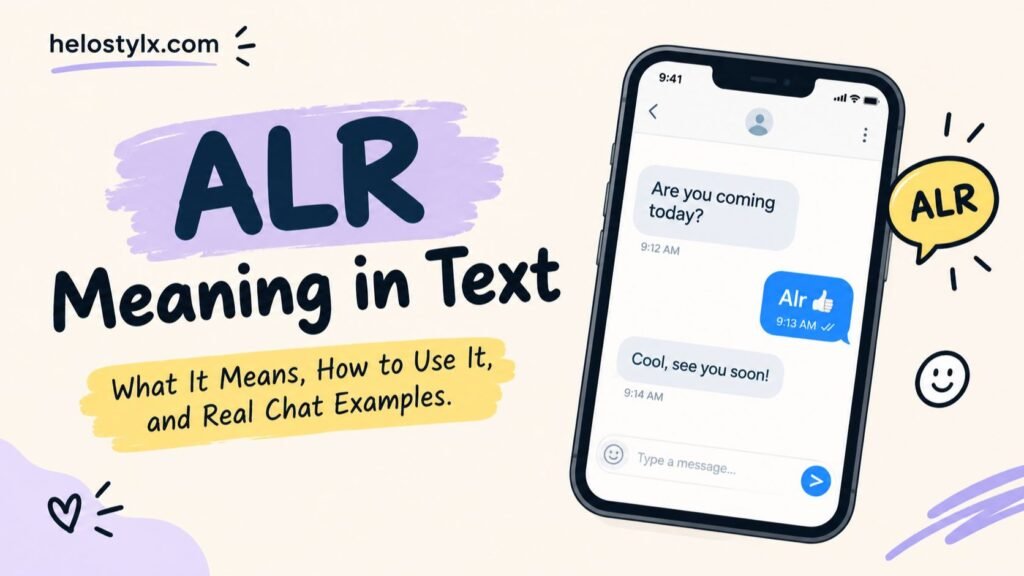

You open a message and the whole reply is three letters: “alr.” No punctuation, no emoji, nothing else. Is that a yes? A shrug? A polite way of ending the chat?
You are not the only one wondering. “Alr” shows up in text messages, DMs, game chats, and comment sections every day, and most people only learn what it means by guessing. This guide explains the alr meaning in text in plain language, shows how tone changes the message, and gives you real chat examples you can copy. By the end, you will know when to use it, when to skip it, and how to reply without any awkwardness.
Quick Answer: What Does “Alr” Mean in Text?
“Alr” is a short form of “alright.” People type it to say okay, sounds good, got it, or I agree. It is informal internet slang used in text messages, social media DMs, and online chats.
Here is the fast version:
- Main meaning: alright (okay, fine, agreed)
- Less common meaning: already (“I did it alr”)
- Tone: casual, usually neutral to friendly
- Best for: chats with friends, family, and peers
- Not great for: job emails, school submissions, or formal messages
If you only need the definition, that is it. The rest of this article covers the details that stop you from misreading someone’s message.
What Does “Alr” Mean?
“Alr” is what linguists call a clipping, which is a word shortened by dropping letters. Dictionaries that track internet slang list it as a text-messaging clipping of “alright,” and also of “already.” The version you meet most often by far is “alright.”
Think of it as the lazy-thumb cousin of “ok.” It keeps the first and last letters of “alright,” which makes it easy to recognize even though the vowels are gone. Most readers decode it instantly without thinking.
also see: Next Time vs. The Next Time: Which One Is Correct?
The Core Meanings
When someone sends “alr,” they usually mean one of these:
- Okay. They accept what you said.
- Sounds good. They agree with a plan.
- Understood. They read your message and have nothing to add.
- Fine. They go along with it, maybe without much excitement.
All four sit in the same family. The exact shade depends on the conversation, which we will cover in the tone section.
“Alright” vs. “All Right
You might wonder which spelling “alr” comes from. In everyday English, “alright” and “all right” mean the same thing in casual speech. Some style guides prefer “all right” in formal writing, but texters never worried about that. “Alr” simply compresses whichever version they would have typed.
A Quick Note on Spelling and Case
You will see it written as “alr,” “Alr,” “ALR,” and “alrrr.” They carry the same base meaning. Capital letters often add energy (“ALR let’s go”), while stretched letters sound relaxed or playful. We will look at these patterns below.
How “Alr” Is Used in Text Messages
People use “alr” in a handful of predictable ways. Once you spot the pattern, it becomes easy to read.
- To confirm a plan. “Meet at 6?” → “alr.”
- To acknowledge information. “Class got moved to Room 204.” → “alr thanks.”
- To agree quickly. “Want to order pizza?” → “alr bet.”
- To close a conversation. “Talk tomorrow.” → “alr, night.”
- To accept something reluctantly. “You have to come with us.” → “alr…”
- To check whether something is okay. “I’ll be late by ten minutes, alr?”
- To transition in a chat. “Alr so here’s the plan.”
The last two are worth noticing. Adding a question mark turns “alr” into a request for approval. Starting a sentence with it works like saying “okay, so” in speech, which helps a conversation move forward.
Where You Will See It Most
“Alr” is common on platforms where people type fast and keep things casual:
- Text messages and iMessage
- WhatsApp and Telegram
- Instagram and Snapchat DMs
- TikTok comments
- Discord servers and gaming chats
The meaning stays the same across all of them. The only thing that changes is the culture around it. On Discord, for example, “alr” often appears in quick back-and-forth during games, while on Snapchat it tends to sit in short replies to Snaps.
What Tone Does “Alr” Convey?
Here is the tricky part. “Alr” has no fixed emotion built in. The tone comes from everything around the word: punctuation, emoji, capitalization, timing, and your history with the sender.
The table below shows the most common patterns.
| How it is written | Likely tone | What it usually means |
| alr | Neutral, relaxed | Okay, no issue |
| alr 👍 | Friendly | Agreed, all good |
| alr! | Upbeat | Happy to go along |
| ALR!! | Excited | Yes, let’s do it |
| Alr. | Flat or serious | Accepted, but little enthusiasm |
| alr… | Hesitant | Reluctant or unsure |
| alr then | Slightly sarcastic | Annoyed or giving up |
| alr bet | Confident | Deal, I’m in |
Punctuation Changes Everything
A period is a good example. Many people read a final period in a text as serious or cold, even when it was not intended that way. “Alr.” can feel curt next to “alr.” That does not mean the sender is upset. Some people just type with full punctuation as a habit.
Ellipses add doubt. If a friend replies “alr…” after you suggest a new plan, they may be hiding some hesitation. It is a good moment to ask, “You sure?”
Emoji Do the Heavy Lifting
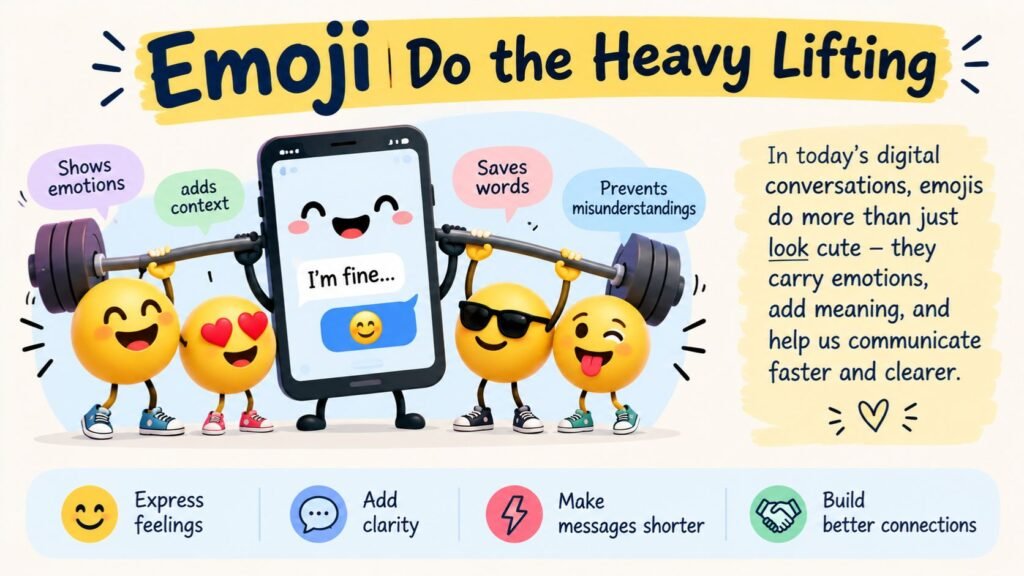
A thumbs-up, smile, or fire emoji after “alr” pushes it toward warm and positive. A shrug or an eye roll does the opposite. When the emoji and the word disagree, trust the emoji.
Know the Sender
The most reliable tone clue is the person themselves. If your friend always types “alr” with no extras, it is just their normal style. If someone who usually writes long, cheerful messages suddenly sends a bare “alr.”, that change may be worth noticing.
Real Chat Examples of “Alr”
Reading examples helps more than reading definitions. Here are several short conversations that show “alr” in different situations.
Example 1: Making Plans
Maya: Dinner at 7 instead of 6? Jordan: alr that works 👍 Maya: Cool, I’ll book it.
Jordan agrees and confirms the new time. The emoji keeps the tone friendly.
Example 2: Acknowledging Information
Sam: Your package is at the front desk. Priya: alr thanks, grabbing it after class
Here “alr” just means “got it.” It is the most common everyday use.
Example 3: Reluctant Agreement
Chris: We’re doing the group project on Sunday. Dana: alr… Chris: You good with that? Dana: I have plans but I can move them
Dana’s ellipsis hinted at hesitation, and Chris picked up on it. A simple follow-up question cleared things up.
Example 4: Excited Agreement
Leo: Concert tickets just dropped!! Ava: ALR WE’RE GOING
All caps and no punctuation show pure excitement. Nobody would read this as cold.
Example 5: Closing the Conversation
Nina: I’m heading to bed, talk tomorrow? Omar: alr goodnight
“Alr” works as a soft sign-off here. It is polite, brief, and friendly.
Example 6: The “Already” Version
Tara: Did you finish the slides? Ben: yeah I did them alr
In this case “alr” replaces “already.” Notice that it sits at the end of the sentence and describes timing, which is the clue that separates it from “alright.”
Examples of “Alr” in Sentences
Sometimes you want clean sentence examples rather than full chats. These show both meanings.
As “alright”:
- “Alr, I’ll text you when I get there.”
- “Alr, that makes sense.”
- “Alr see you at nine.”
- “Alr cool, send me the address.”
- “Alr bet, count me in.”
As “already”:
- “I alr ate, so I’m good.”
- “She’s alr there.”
- “We alr talked about this.”
- “It’s alr midnight?”
A simple test: if you can swap in “okay” and the sentence still works, it means “alright.” If you can swap in “already,” it is the other meaning.
When Should You Use “Alr”?
“Alr” is a good choice when you want to sound relaxed and keep a message short. Use it in these situations:
- Texting friends or classmates. It fits the casual style perfectly.
- Confirming simple plans. Quick yes-or-no logistics are where it shines.
- Replying while multitasking. It acknowledges a message without a long answer.
- Group chats and gaming. Speed matters, and everyone understands the shorthand.
- Matching the other person’s style. If they use slang, you can use it back.
A useful rule is to mirror the other person. If they write in full sentences, a warm “Sounds good!” may land better. If they write in lowercase shorthand, “alr” blends right in.
When You Should Avoid Using “Alr”
Slang is great until it is in the wrong place. Skip “alr” when:
- Writing to a boss, client, or professor. Choose “Understood” or “Sounds good” instead.
- Sending a job application or any formal email. Abbreviations can look careless.
- Answering an emotional message. If a friend shares bad news, a bare “alr” can feel dismissive.
- Talking with someone who may not know slang. Older relatives or non-native English speakers may misread it.
- Handling disagreements. A short reply can sound like you are shutting the other person down.
A Better Option for Sensitive Moments
If someone tells you something important, add a few more words. “Alright, thanks for telling me. I’m here if you need anything” feels very different from “alr.” Short replies are efficient, but warmth sometimes needs space.
Different Meanings Based on Context
Most of the time, “alr” means “alright.” Still, context can change things. The table below covers what you may run into.
| Meaning | Where it appears | Example | How common |
| Alright | Texts, DMs, chats | “alr see you soon” | Very common |
| Already | Casual texts, social media | “I alr did it” | Fairly common |
| All righty | Playful chats | “alr then, let’s go” | Occasional |
| ALR (law) | Legal writing | American Law Reports | Professional only |
| ALR (other) | Technical or local use | Various organizations | Not texting |
Telling “Alright” and “Already” Apart
Position gives you a strong hint:
- At the start of a message, it almost always means “alright.”
- After a verb, near the end of a sentence, it often means “already.”
- Alone as a reply, it means “alright” in nearly every case.
The one tricky spot is a standalone reply that could fit both. If someone asks “Is the bus here yet?” and gets back “alr,” it could mean “alright” or “already.” In that rare case, a quick “Wait, here already?” fixes the confusion.
A Word of Caution About Odd Definitions
Some low-quality websites list unusual meanings for “alr,” such as invented phrases that no real texter uses. If a definition seems far from “alright” or “already,” treat it carefully. Reliable dictionary sources and real conversation patterns point to the two meanings above. When in doubt, ask the person directly.
Is “Alr” Rude?
Not by itself. “Alr” is neutral. It is a short word, and short can feel abrupt, but the word has no negative meaning built in.
Whether it feels rude depends on three things:
- Context. Replying “alr” to a plan is fine. Replying “alr” to someone who just poured their heart out may sting.
- Delivery. A period, ellipsis, or “alr then” can carry irritation. A smiley or exclamation mark carries warmth.
- Relationship. Close friends read each other’s shorthand easily. Newer contacts may read more into it.
When “Alr” Can Sound Passive-Aggressive
People sometimes use it to end a disagreement. “Alr.” after a long argument can mean “I’m done discussing this.” If you see this, avoid assuming the worst. Ask something like “Are we good?” That gives the other person a chance to say how they really feel.
Is “Alr” Flirty?
No. “Alr” has no romantic meaning on its own. Flirty energy, if any, comes from other words, emoji, or the history between two people. A plain “alr” from a crush is simply agreement, so there is no need to analyze it too hard.
“Alr” vs. Similar Text Abbreviations
“Alr” lives in a crowded neighborhood of short replies. Here is how it compares.
| Abbreviation | Meaning | Tone | Best use |
| alr | Alright | Casual, flexible | Everyday agreement |
| k | Okay | Very short, can feel cold | Fast confirmation |
| ok | Okay | Neutral | Almost anywhere informal |
| kk | Okay, okay | Friendly, soft | Light agreement |
| ight / aight | Alright | Relaxed, slangy | Friends, informal talk |
| bet | Agreed, I’m in | Confident, upbeat | Accepting plans |
| sure | Fine, yes | Neutral, sometimes lukewarm | Mild agreement |
| fr | For real | Emphasis | Strong agreement |
Alr vs. K
“K” is the shortest and often reads as the coldest. Many people feel that a lone “k” signals annoyance. “Alr” has more shape to it, so it generally feels warmer and more natural.
Alr vs. Ok
Both work in almost every informal chat. “Ok” is a bit more universal, while “alr” feels more tied to youth slang. Use “ok” if you are not sure your audience knows the shorthand.
Alr vs. Aight
These two overlap heavily. “Aight” imitates how people say “alright” in speech, while “alr” is a typed shortcut. You may see both in the same group chat.
Alr vs. Bet
“Bet” adds confidence and enthusiasm. “Alr bet” combines them: “alright, deal.” It is one of the most common pairings you will see.
Why “Alr” Became Popular
Short slang does not appear by accident. Several forces helped “alr” spread.
The Texting Habit
Early mobile phones had character limits and slow keypads, so people trimmed words to save effort. Even though modern phones removed those limits, the habit stayed. Typing fewer letters still feels faster, especially in rapid back-and-forth.
Social Media and Gaming
Platforms built around fast replies, such as Snapchat, TikTok comments, and Discord, reward brevity. In a game chat, nobody wants to type a full sentence while fighting an enemy. “Alr” acknowledges a teammate in under a second.
Peer Identity
Slang also signals belonging. Using the same shorthand as your friends makes a chat feel comfortable and familiar. Researchers who study language have long noted that informal vocabulary helps groups mark who is part of the circle.
Easy to Recognize
Many abbreviations fail because nobody can decode them. “Alr” survives because it looks like the word it replaces. You can see “al” and “r,” and your brain fills in “alright.” That readability helped it spread across regions without needing a dictionary.
Spread Through Screens
Short clips, memes, and screenshots carry slang across borders in days. A term used in one city’s group chat can appear in another country’s comment section within weeks. “Alr” benefited from this global loop.
Common Mistakes People Make with “Alr”
Even a simple word can trip people up. Watch out for these errors.
- Assuming it always means irritation. Most of the time, it is just a quick acknowledgment.
- Overlooking the “already” meaning. If a sentence sounds odd with “alright,” try “already.”
- Using it in formal settings. A professor or manager may think it looks unprofessional.
- Ignoring the rest of the message. Emoji and punctuation tell you more than the three letters.
- Replying with “alr” to every emotional message. It can make you seem distant.
- Overusing slang in one message. A chain like “alr bet fr no cap” can confuse readers who do not use that style.
- Misreading a punctuation habit. Some people end every message with a period. That is not an attitude.
- Trusting random definition sites. If a meaning seems invented, it probably is.
How to Avoid Misunderstandings
When you are unsure, do the simple thing: ask. “Alr as in okay, or alr as in you’re annoyed?” can be asked with a smile emoji, and it usually clears things in seconds. Short questions beat long guesses.
How to Reply to “Alr”
Your reply depends on what the other person meant. Here is a quick guide.
If They Are Confirming a Plan
You can reply with a simple confirmation:
- “Perfect, see you then.”
- “Great, I’ll message you when I’m there.”
- “Cool 👍”
If They Sound Unsure
Check in gently:
- “Does that actually work for you?”
- “We can change it if you want.”
- “No pressure, tell me what you prefer.”
If They Are Closing the Chat
You can just let it end:
- “Night!”
- “Talk later.”
- “Take care.”
If They Said “Alr” After an Argument
Keep it calm and open:
- “I’m sorry if that came out wrong. Are we good?”
- “I want to hear your side if you want to talk.”
If You Don’t Need to Reply
Sometimes the best reply is none. If “alr” answers your question and there is nothing left to say, the conversation is complete. Not every message needs a response, and sending one more text just to end the chat can create an endless loop.
Other Popular Texting Abbreviations You Should Know
If you are learning “alr,” you will probably meet these too.
| Abbreviation | Meaning | Example |
| idk | I don’t know | “idk where it is” |
| tbh | To be honest | “tbh I liked it” |
| brb | Be right back | “brb grabbing food” |
| ngl | Not gonna lie | “ngl that was funny” |
| imo | In my opinion | “imo we should wait” |
| omw | On my way | “omw, 5 minutes” |
| ttyl | Talk to you later | “ttyl, class starting” |
| wyd | What are you doing? | “wyd tonight?” |
| rn | Right now | “busy rn” |
| ily | I love you | “ily, see you soon” |
Learning a few of these gives you a stronger feel for how casual messages work. Just remember that slang changes quickly, and what feels current this year may sound dated in a few years.
Why Context Matters More Than the Word
By now you have probably noticed a pattern. The word “alr” is almost never the interesting part. What matters is everything surrounding it.
Think about a spoken “okay.” You can say it cheerfully, wearily, angrily, or with a laugh. Text strips away your voice, so people use punctuation, emoji, timing, and style to fill the gap. A reply that arrives instantly feels different from one that shows up after three hours. A message from a friend feels different from one from a stranger.
Here is a short checklist to read “alr” correctly:
- Look at the question it answers. Was it a plan, a request, or a confession?
- Check the punctuation. Periods and ellipses change the mood.
- Look for emoji. They often settle the tone.
- Consider the sender’s normal style. Compare it to how they usually write.
- Think about timing. A very late or very quick reply can add meaning.
- When unsure, ask. A short, kind question avoids a long misunderstanding.
This approach works for every abbreviation, not just this one. Texting is a lot like face-to-face talking with half the clues removed, so extra attention goes a long way.
Conclusion
The alr meaning in text is simple: it is a casual shortening of “alright,” used to say okay, got it, or sounds good. In some sentences it stands in for “already,” and you can tell the difference by where the word sits. It is friendly in most chats, neutral in many, and occasionally curt when paired with a period or ellipsis.
Use it with friends, in group chats, and in fast conversations. Skip it in formal emails and in moments when someone needs warmth. Read the punctuation, check for emoji, and think about who sent it before deciding what it means.
Next time that three-letter reply lands in your inbox, you will know what to do with it. If it still feels unclear, a quick friendly question is always better than a long guess.