


You’re typing a quick message: “See you on Thursdays” or “See you on Thursday’s”? Or maybe you’re writing about “Thursday’s meeting” and wondering whether that apostrophe belongs.
It’s a small detail, but it shows up in emails, calendar invites, menus, social posts and school newsletters. A misplaced apostrophe is easy to spot and just as easy to avoid once you know the rule.
This guide explains when to use Thursdays, Thursday’s and Thursdays’, with plain definitions, real examples, a comparison table and quick tests you can run in a few seconds.
The Short Answer
Use “Thursdays” (no apostrophe) when you mean more than one Thursday or something that happens every Thursday. Use “Thursday’s” when something belongs to Thursday, or when you’re shortening “Thursday is.”
- Thursdays = plural (“I teach on Thursdays.”)
- Thursday’s = possessive or contraction (“Thursday’s forecast looks clear.” / “Thursday’s the day we ship.”)
- Thursdays’ = plural possessive, and rare (“Both Thursdays’ schedules were packed.”)
If you remember one thing: plurals never take an apostrophe, and possessives always do.
Quick Comparison Table
| Form | What it does | Example |
| Thursday | Singular, one specific day | “The report is due Thursday.” |
| Thursdays | Plural, or every Thursday | “The library closes early on Thursdays.” |
| Thursday’s | Possessive, or “Thursday is” | “Thursday’s agenda is short.” |
| Thursdays’ | Plural possessive | “The Thursdays’ early closings annoyed everyone.” |
When to Use “Thursdays”
“Thursdays” is the plain plural of Thursday. It has two main jobs.
1. Talking About Repeated or Recurring Events
When something happens every Thursday, “Thursdays” is the natural choice. It works as a casual adverb and tells the reader the event repeats.
- “Our team meets on Thursdays.”
- “She volunteers at the shelter Thursdays.”
- “The farmers market runs Thursdays from May to October.”
- “I never schedule calls on Thursdays.”
In American English you can drop “on” (“We meet Thursdays”). In British English “on Thursdays” is more common. Both are correct.
2. Referring to More Than One Specific Thursday
Sometimes you’re counting or comparing separate Thursdays rather than describing a routine:
- “There are five Thursdays in October this year.”
- “The last two Thursdays have been rainy.”
- “Thursdays are my favorite day of the week.”
In that last sentence, “Thursdays” is the subject and means Thursdays in general.
Why There’s No Apostrophe
English forms plurals by adding -s or -es. Apostrophes aren’t part of that process. Writing “Thursday’s” for a plural, as in “We’re open Thursday’s and Fridays,” is a classic error that style guides call out. Some people nickname it the “greengrocer’s apostrophe,” after old market signs reading “Apple’s 50p.”
When to Use “Thursday’s”
“Thursday’s” has two legitimate uses, and they’re easy to confuse because they look identical on the page.
1. Showing Possession or Association
The apostrophe plus s shows that something belongs to, comes from, or is connected with a particular Thursday.
- “Thursday’s meeting has been moved to 3 p.m.”
- “Did you read Thursday’s newsletter?”
- “Thursday’s weather will be warm and dry.”
- “I missed Thursday’s lecture.”
In each case you’re talking about one specific Thursday and something connected to it. A quick check is that you can usually rewrite the phrase with “of Thursday”: “the meeting of Thursday,” “the weather of Thursday.” It sounds stiff, but if it makes sense, the possessive is correct.
2. Contracting “Thursday Is” or “Thursday Has”
In informal writing and speech, “Thursday’s” can stand in for “Thursday is”:
- “Thursday’s the deadline, so don’t leave it to Friday.”
- “Thursday’s going to be a long day.”
It can also stand in for “Thursday has,” though that’s less common:
- “Thursday’s been the busiest day of my week.”
This contraction suits emails, texts and conversational blog posts. In formal documents such as contracts, academic papers and official letters, write it out as “Thursday is.”
Telling the Two Meanings Apart
Because possessive and contraction look the same, context decides. Ask what follows the word:
- Followed by a noun (meeting, forecast, edition, game), it’s probably possessive: “Thursday’s game.”
- Followed by a verb or description (is, was going to, has been), it’s probably a contraction: “Thursday’s the big day.”
When to Use “Thursdays’” (The Rare One)
“Thursdays’” is the plural possessive. It means something belongs to several Thursdays. It’s legal, but you won’t need it often, and it can read awkwardly.
Examples:
- “The last three Thursdays’ attendance figures were disappointing.”
- “Both Thursdays’ schedules need updating.”
If it sounds clumsy, rephrase it. Writing “attendance on the last three Thursdays was disappointing” is clearer and avoids the problem entirely. Good editors often prefer that kind of rewrite for readability.
The pattern is the same as other plural possessives: take the plural (Thursdays), then add an apostrophe after the s.
Three-Step Test to Choose the Right Form
When you’re unsure, run through these quick checks.
- Can you replace the word with “every Thursday” or “on multiple Thursdays”? If yes, use Thursdays with no apostrophe.
- “We play cards every Thursday” becomes “We play cards Thursdays.”
- Can you replace it with “Thursday is” or “Thursday has”? If yes, use Thursday’s as a contraction.
- “Thursday is the cutoff” becomes “Thursday’s the cutoff.”
- Does something belong to or come from Thursday? If yes, use Thursday’s as a possessive.
- “The schedule for Thursday” becomes “Thursday’s schedule.”
If none of those fit, you probably just need “Thursday,” with no ending at all: “See you Thursday.”
Decision Guide
| Ask yourself… | If yes | Example |
| Does it happen every Thursday? | Thursdays | “Classes start at 9 on Thursdays.” |
| Am I counting or listing Thursdays? | Thursdays | “Two Thursdays from now.” |
| Does something belong to one Thursday? | Thursday’s | “Thursday’s deadline.” |
| Can I swap in “Thursday is”? | Thursday’s | “Thursday’s my day off.” |
| Does something belong to several Thursdays? | Thursdays’ | “The Thursdays’ turnout.” |
| Is it just one day, with nothing attached? | Thursday | “It’s due Thursday.” |
Common Mistakes (And How to Fix Them)
Most errors with this word follow a few repeatable patterns.
Mistake 1: Adding an Apostrophe to Make a Plural
- ❌ “Our store is closed on Thursday’s.”
- ✅ “Our store is closed on Thursdays.”
Nothing belongs to Thursday here, so there’s no reason for an apostrophe.
Mistake 2: Dropping the Apostrophe from a Possessive
- ❌ “Did you get Thursdays email?”
- ✅ “Did you get Thursday’s email?”
The email belongs to one Thursday, so it needs the possessive.
Mistake 3: Putting the Apostrophe After the S for a Singular Day
- ❌ “Thursdays’ meeting is at noon.” (when you mean one Thursday)
- ✅ “Thursday’s meeting is at noon.”
The apostrophe goes after the s only for a plural possessive, which means several Thursdays.
Mistake 4: Forgetting Capitalization
Days of the week are proper nouns in English, so they’re always capitalized.
- ❌ “thursday’s class was cancelled.”
- ✅ “Thursday’s class was cancelled.”
Mistake 5: Mixing Up Contraction and Possessive in Formal Writing
- ❌ “Thursday’s the date stated in clause 4.” (in a contract)
- ✅ “Thursday is the date stated in clause 4.”
The contraction is fine in a text message but looks out of place in a legal or academic document.
Quick Wrong-vs-Right Table
| Incorrect | Correct | Why |
| “We meet Thursday’s.” | “We meet Thursdays.” | Plural, no possession |
| “Thursdays schedule” | “Thursday’s schedule” | Needs possessive apostrophe |
| “thursdays” | “Thursdays” | Capitalize days of the week |
| “Thursdays’ news” (one day) | “Thursday’s news” | Singular possessive |
| “Thursday’s are busy.” | “Thursdays are busy.” | Plural subject, no apostrophe |
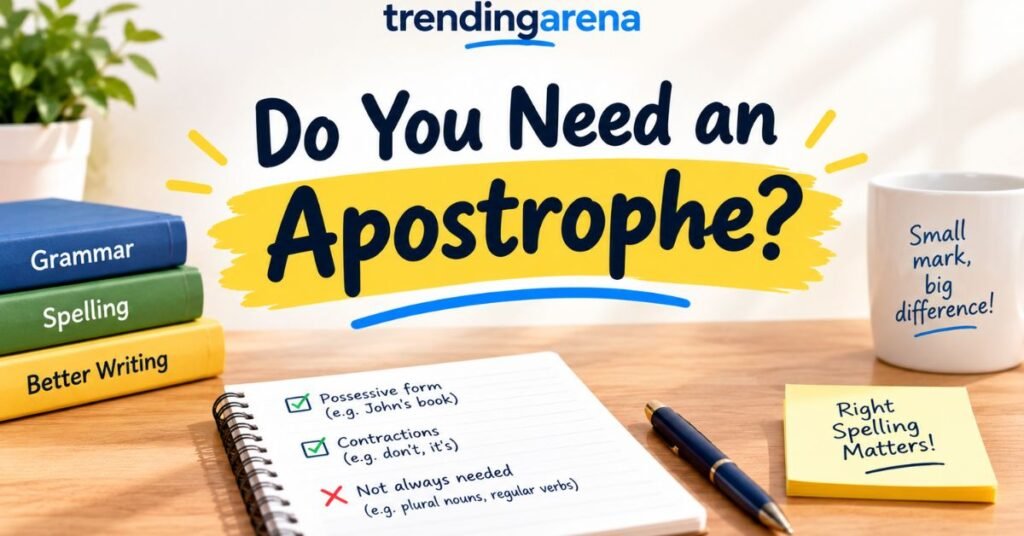
Thursday as a Modifier: Do You Need an Apostrophe?
Here’s a wrinkle many guides skip. Sometimes “Thursday” sits in front of another noun to describe it, as in “Thursday meeting”, “Thursday night football” or “Thursday deadline.” Is that a possessive or just an adjective-style use of the noun?
Both forms can be correct, and writers are split:
- Thursday meeting: the day acts as a modifier (a noun used like an adjective).
- Thursday’s meeting: the possessive, with the same meaning.
Neither is wrong. Many editors treat the apostrophe as optional here, since both read naturally. What matters most is consistency within a single piece of writing. If you write “Thursday’s deadline” in one paragraph, don’t switch to “Thursday deadline” in the next without a reason.
A practical rule of thumb:
- Use no apostrophe for fixed names and labels: “Thursday Night Football,” “Throwback Thursday,” “Thursday special.”
- Use the apostrophe when you’re pointing to one specific day: “Thursday’s special was soup.”
When in doubt, check the style guide your publication follows, or the brand’s own spelling if you’re writing about a named event or business.
also read this:Organizing vs Organising: Which Spelling Should You Use in 2026?
Using Thursdays and Thursday’s in Real Writing
Different contexts call for slightly different choices. Here’s how this plays out where people actually write.
In Emails and Business Messages
Clear scheduling language saves back-and-forth. Compare:
- “Our team standup is on Thursdays at 10 a.m.” (a recurring meeting)
- “Please send me Thursday’s report by noon.” (one specific report)
- “Thursday’s the last day to register.” (informal contraction)
For client or executive emails, lean toward the full “Thursday is” and “the Thursday meeting” rather than contractions.
In Calendar Invites and Event Listings
Recurring events almost always use the plural:
- “Yoga: Thursdays, 6–7 p.m.”
- “Book Club (every other Thursday)”
- “Thursdays at the Market”
Notice that “every other Thursday” uses the singular, because “Thursday” follows the word “every.” That’s a common point of confusion. After every or each, use the singular: “every Thursday,” “each Thursday.”
In Social Media and Casual Writing
Social platforms love day-based themes, and most of them use the plural or a fixed label:
- “Thursdays are for tacos.”
- “Throwback Thursday”
- “Thankful Thursday”
Even in a casual caption, an apostrophe in a plural looks like a typo to many readers, so keep the plural clean.
In Schools and Workplaces
Notices from teachers and managers often combine both forms:
- “Library hours on Thursdays are extended until 6 p.m.” (recurring)
- “Please return Thursday’s permission slip by Monday.” (one specific slip)
- “Thursday’s assembly will start at 9:15.” (one specific event)
In Formal and Academic Writing
Here, clarity and conventions matter most:
- Prefer “on Thursdays” to “Thursdays” without the preposition.
- Avoid the contraction. Write “Thursday is” rather than “Thursday’s.”
- Consider rephrasing a possessive when it sounds clumsy: “the results from Thursday” instead of “Thursday’s results.”

How Style Guides Treat It
The major style guides, including those used by newspapers, publishers and universities, agree on the basics even though they differ on small points.
- Plurals of day names are formed with -s and no apostrophe.
- Possessives follow the normal possessive rules: apostrophe plus s for singular, apostrophe after the s for plural.
- Days of the week are always capitalized.
- Dates with weekdays use commas: “Thursday, October 29, is the deadline.”
Where guides differ is on abbreviations and modifiers. Some prefer the full word in running text; others accept “Thurs.” in schedules or tables. If you write for a publication, check its house style. If you write for yourself or a small business, pick one approach and apply it consistently.
Abbreviations You Might See
| Abbreviation | Common context |
| Thu. | Calendars, tables |
| Thurs. | Schedules, informal listings |
| Th | Some academic or timetable formats |
| R | Occasionally used in US university schedules to avoid confusion with “T” for Tuesday |
Abbreviated plurals follow the same no-apostrophe rule: “Thurs.” stays “Thurs.” rather than becoming “Thurs.’s.”
The Same Rule Applies to Every Day of the Week
If you’ve got Thursday sorted, you’ve got all seven. The logic is identical:
| Day | Plural (recurring) | Possessive (one day) |
| Monday | Mondays | Monday’s |
| Tuesday | Tuesdays | Tuesday’s |
| Wednesday | Wednesdays | Wednesday’s |
| Thursday | Thursdays | Thursday’s |
| Friday | Fridays | Friday’s |
| Saturday | Saturdays | Saturday’s |
| Sunday | Sundays | Sunday’s |
Some business names add a twist. A restaurant chain might use “Fridays” or “Tuesday Morning” as a proper name. In those cases, copy the official spelling, even if it breaks the usual pattern.
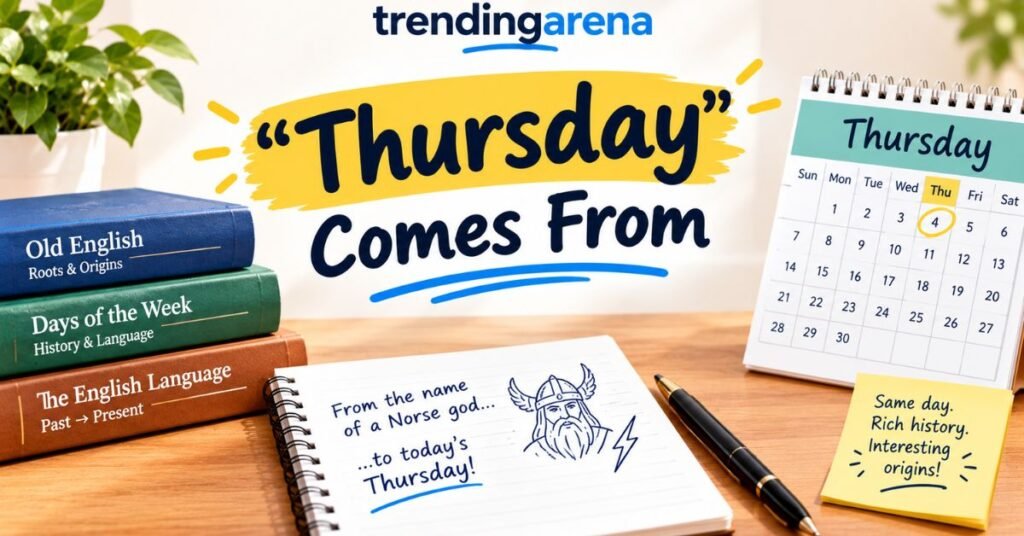
Where the Name “Thursday” Comes From
A little background helps the word stick. “Thursday” comes from Old English Thunresdæg, meaning “Thor’s day,” named after the Norse god of thunder. English borrowed the pattern from older Latin naming, which linked the day to Jupiter, and Germanic speakers swapped in their own god of thunder.
That origin explains the odd spelling, with the “th” at the start and the “-urs-” in the middle. It has nothing to do with the apostrophe question, but it’s a good reminder that “Thursday” is a proper noun with a long history, which is why it’s capitalized.
Examples You Can Borrow
Use these sentences as models. Each one shows a different form in a realistic setting.
Plural (Thursdays):
- “The garden club meets Thursdays after work.”
- “We’re closed Sundays and Thursdays during winter.”
- “Thursdays tend to be quieter than Fridays at the office.”
- “There were three Thursdays in a row with heavy rain.”
Singular possessive (Thursday’s):
- “Thursday’s match was postponed because of the storm.”
- “Can you send me Thursday’s notes?”
- “Thursday’s traffic was awful.”
- “I loved Thursday’s episode.”
Contraction (Thursday’s = Thursday is/has):
- “Thursday’s the best day to book flights.”
- “Thursday’s already full, so let’s try Friday.”
- “Thursday’s been a great day for sales.”
Plural possessive (Thursdays’):
- “The past few Thursdays’ sales were unusually strong.”
- “Those Thursdays’ guest speakers were excellent.”

Test Yourself
Pick the correct option in each sentence. Answers are below.
- “We have yoga class every ______.” (Thursday / Thursday’s / Thursdays)
- “______ presentation went really well.” (Thursdays / Thursday’s)
- “I work from home ______.” (Thursdays / Thursday’s)
- “______ the cutoff for entries.” (Thursdays / Thursday’s)
- “The last two ______ attendance has been low.” (Thursdays / Thursdays’)
Answers: 1) Thursday (singular after “every”); 2) Thursday’s (possessive); 3) Thursdays (recurring plural); 4) Thursday’s (contraction of “Thursday is”); 5) Thursdays’ (plural possessive).
A Simple Way to Remember It
Here’s a mental shortcut that works for every day of the week:
- S alone = more than one. Thursdays means several, or every one.
- Apostrophe + S = belongs to, or is. Thursday’s means “of Thursday” or “Thursday is.”
- S + apostrophe = belongs to several. Thursdays’ means “of multiple Thursdays.”
Before adding an apostrophe, ask whether something belongs to the day or whether you’re shortening “is.” If neither, leave the apostrophe out.
Frequently Asked Questions
Is it “on Thursdays” or “on Thursday’s”?
“On Thursdays” is correct for recurring events. “On Thursday’s” is only correct if something follows that belongs to Thursday, as in “on Thursday’s flight.”
Does “Thursdays” ever need an apostrophe?
Only in the plural possessive, when something belongs to several Thursdays (“the Thursdays’ attendance”). A plain plural, such as “I work Thursdays,” never takes one.
Is “Thursday’s” a contraction?
It can be. In informal writing it often stands for “Thursday is” or “Thursday has,” as in “Thursday’s the deadline.” Otherwise it’s a possessive. Context tells you which.
Should I capitalize Thursday?
Yes. Days of the week are proper nouns in English, so write “Thursday,” “Thursdays” and “Thursday’s” with a capital T.
What’s the difference between “Thursday” and “Thursdays” in a sentence?
“Thursday” refers to one specific day (“See you Thursday”). “Thursdays” refers to every Thursday or several Thursdays (“I swim on Thursdays”).
Is “Thursday meeting” or “Thursday’s meeting” correct?
Both are acceptable. “Thursday meeting” uses the day as a modifier, while “Thursday’s meeting” is the possessive. Choose one and stay consistent within the same piece of writing.
How do I write a recurring weekly event in a calendar?
Use the plural without an apostrophe: “Book club, Thursdays, 7 p.m.” For every other week, write “every other Thursday.”
Does the same rule apply to the other days of the week?
Yes. Use Mondays, Tuesdays, Wednesdays, Fridays, Saturdays and Sundays for plurals, and add an apostrophe plus s (Monday’s, Friday’s) for possessives and contractions.
Can I use “Thursday’s” in formal writing?
As a possessive, yes (“Thursday’s ruling”). As a contraction for “Thursday is,” avoid it in formal documents and write the full words.
What is the plural possessive of Thursday?
“Thursdays’,” with the apostrophe after the s, as in “the last three Thursdays’ results.” Many writers rephrase to avoid it.
Conclusion
Choosing between Thursdays and Thursday’s comes down to one question: are you showing plurality, or are you showing possession or a contraction?
- Use Thursdays for recurring events and more than one Thursday: “We meet on Thursdays.”
- Use Thursday’s when something belongs to a specific Thursday or when you’re shortening “Thursday is”: “Thursday’s agenda is ready.”
- Use Thursdays’ only when something belongs to several Thursdays, and rewrite the sentence if it feels awkward.
- Always capitalize the day, and avoid contractions in formal writing.
Once you spot the pattern, it applies to every other day of the week as well.