

You are writing a birthday card, a hospital newsletter, or a quick text to a friend. You want to say more than one baby. Your hand stops. Does it look right with a “y” and an “s,” or with “ies”? It is a small spelling question, but it trips up plenty of confident writers.
Here is the short truth: the correct plural is babies. “Babys” is a misspelling in standard English. This guide explains why, shows you the rule behind it, and gives you simple tricks so you never have to stop and wonder again. You will also see where people go wrong with apostrophes, how the word appears in real writing, and what the dictionary evidence says about its history.
Babys or Babies: Quick Answer
The plural of baby is babies.
The rule is simple. When a noun ends in a consonant followed by “y,” you drop the “y” and add “ies.” Baby ends in “b-y,” and “b” is a consonant. So baby becomes babies.
- ✅ Babies is correct.
- ❌ Babys is incorrect.
The one common exception is proper names. Spelling rules do not apply to family names, so “the Jollys” keeps its “y” and simply adds an “s.” A word like “baby” is not a proper name, so the exception does not apply.
Examples
Here are a few sentences that show the correct form in action.
- “Three babies were born at the clinic on Sunday.”
- “The nursery cares for babies under twelve months.”
- “She bought matching blankets for both babies.”
- “Newborn babies sleep for most of the day.”
- “All the babies in the room started to giggle.”
Now look at the same sentences with the wrong spelling, so the error is easy to spot.
- ❌ “Three babys were born at the clinic on Sunday.”
- ❌ “The nursery cares for babys under twelve months.”
If you see “babys” in your own draft, change it to “babies.” A spell checker will usually catch it, but it helps to know why.
The Origin of Babys or Babies
Knowing where a word comes from can make its spelling feel less random. The story of “baby” is short and a little charming.
According to Etymonline, the word baby was first recorded in the late 1300s, in the form babi, meaning an infant of either sex. It is a diminutive of the older word babe, built by adding the small “-y” ending. That same ending shows up in “doggy,” “kitty,” and “mommy,” where it signals something small or dear.
Babe itself is older. Etymonline notes that it is short for the early 13th-century word baban, and that it is probably imitative of baby talk. It is closely tied to the verb babble. In other words, the word likely began as an imitation of the sounds young children make. No deep ancient root is recorded for it, which fits the idea that it grew from sound rather than from a formal source.
Over the centuries, “baby” picked up many extra senses. Etymonline records several:
- A childish adult, around 1600.
- A tiny reflection of yourself in someone else’s eye, in the 1590s, linked to the word pupil.
- A term of endearment for a lover, perhaps as early as 1839 and certainly by 1901.
- The youngest in a group, by 1897.
- A verb meaning to treat someone like a baby, in 1742.
Compound words followed. Baby food appears in 1833, and baby’s breath, the delicate flower, in 1897. Etymonline also says French bébé is thought to have come from English in the 19th century.
Why Does the Plural Look Different?
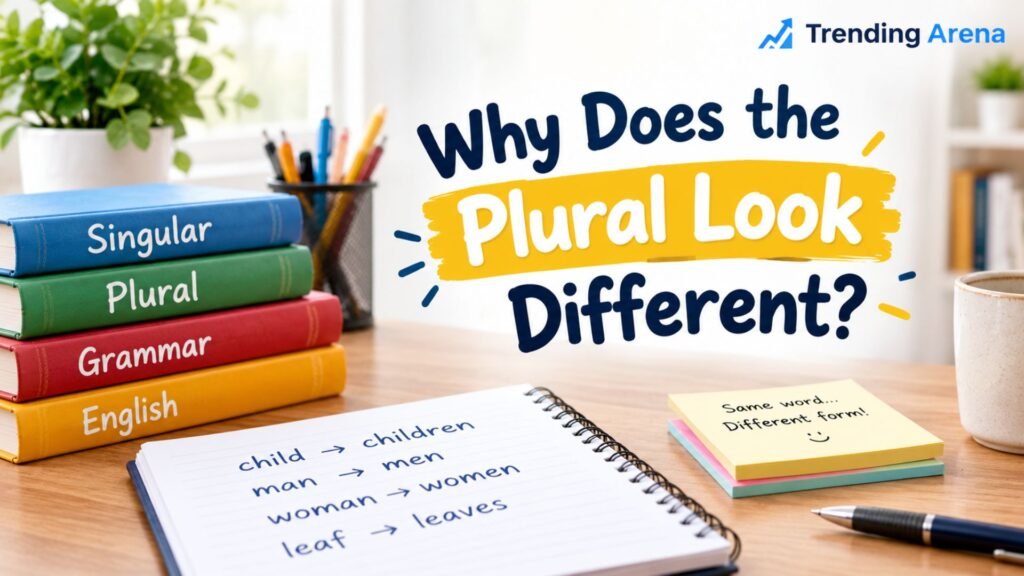
The spelling “babies” comes from a long-standing habit in English. When a word ends in a consonant plus “y,” the “y” turns into an “i” before certain endings. The pattern has been part of written English for centuries, and it applies to hundreds of common words. Baby simply follows the pattern.
This is why teachers sometimes call it the “y to i” rule. It is not a special exception for babies. It is the ordinary rule for most nouns that end in a consonant and a “y.”
Easy Tricks To Remember The Difference: When Does Y Change to IES?
The plural of “baby” depends on one question: what letter comes right before the “y”?
The Two-Step Rule
- Look at the letter just before the final “y.”
- If it is a consonant (b, c, d, f, g, and so on), change the “y” to “ies.”
- If it is a vowel (a, e, i, o, u), keep the “y” and add “s.”
Baby has a “b” before the “y.” A “b” is a consonant, so the plural is babies.
Compare it with “boy.” The letter before the “y” is “o,” a vowel. So the plural is boys, not “boies.”
Consonant + Y Examples
| Singular | Letter before y | Plural |
| baby | b (consonant) | babies |
| city | t (consonant) | cities |
| country | r (consonant) | countries |
| memory | r (consonant) | memories |
| factory | r (consonant) | factories |
| sky | k (consonant) | skies |
| family | l (consonant) | families |
| story | r (consonant) | stories |
Vowel + Y Examples
| Singular | Letter before y | Plural |
| boy | o (vowel) | boys |
| key | e (vowel) | keys |
| tray | a (vowel) | trays |
| donkey | e (vowel) | donkeys |
| journey | e (vowel) | journeys |
| toy | o (vowel) | toys |
| day | a (vowel) | days |
Memory Tricks That Work
Here are a few quick tricks you can use right away.
- The “bye-bye y” trick. For a consonant plus “y,” say goodbye to the “y” and welcome “ies.” Baby, bye-bye y, babies.
- The vowel shield. A vowel before the “y” acts like a shield. It protects the “y,” so you only add an “s.”
- The “ies” sound test. Say the plural aloud. Babies ends in a clear “eez” sound. “Babys” would look like it rhymes with “maybes,” which is a good clue that the spelling is off.
- The boys and babies check. If you can spell “boys,” ask whether your word has the same pattern. If the letter before “y” is a vowel, it does. If not, switch to “ies.”
The Same Rule Works Beyond Plurals
Once you know this pattern, you will see it everywhere. The Proofed writing guide describes the same “y to i” rule across several word types.
- Plurals: baby → babies, city → cities.
- Verbs: worry → worries (present) and worried (past). Spy → spies and spied.
- Comparatives: happy → happier, happiest.
- Adverbs: easy → easily.
There is also a small exception worth knowing. When you add an ending that starts with “i,” such as “-ing,” the “y” stays. That is why we write “babying” and “carrying,” not “babiing.” Two “i” letters in a row would look strange, so English keeps the “y.”
British English vs American English Spelling
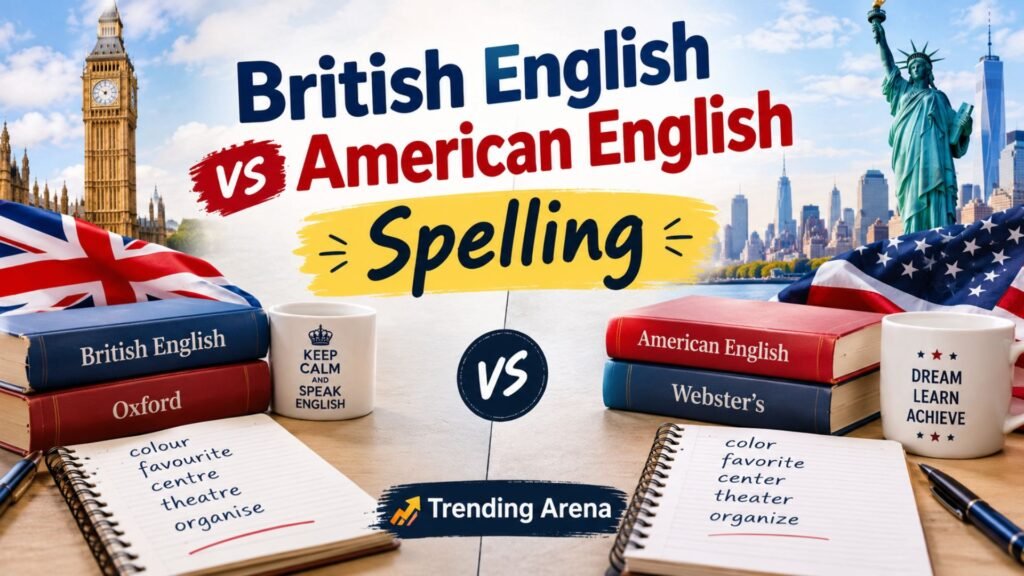
If you are wondering whether British and American writers handle this word differently, the answer is no. Both spell the plural babies. The singular is baby in both varieties.
You will not find a regional version of “babys” in standard British or American English.
The differences between the two varieties lie in other areas, and it helps to know what stays the same here.
| Feature | American English | British English |
| Singular | baby | baby |
| Plural | babies | babies |
| Singular possessive | baby’s | baby’s |
| Plural possessive | babies’ | babies’ |
| Common compound | baby carriage (US), baby shower | pram or pushchair, baby shower |
A few related notes may help if you write for an international audience.
- Vocabulary differs, spelling does not. Americans say “baby carriage” or “stroller,” while many British speakers say “pram” or “pushchair.” The plural of “baby” stays the same.
- Related spellings follow the same rule. Words such as “lady/ladies,” “party/parties,” and “puppy/puppies” are identical in both varieties.
- Informal clips and brand names may differ. Some brands and band names use creative spellings on purpose. These are stylistic choices, not standard spelling.
If you write for a global site, you do not need a separate version for each region. Use “babies” everywhere.
Comparison Table: Baby, Babies, Baby’s, and Babies’
Four forms of this word cause confusion. Each one has its own job. Here they are side by side.
| Form | Type | Meaning | Example |
| baby | Singular noun | One infant | “The baby is asleep.” |
| babies | Plural noun | More than one infant | “The babies are asleep.” |
| baby’s | Singular possessive | Belongs to one baby | “The baby’s blanket is soft.” |
| babies’ | Plural possessive | Belongs to several babies | “The babies’ room is down the hall.” |
| babys | Not standard | A misspelling | Avoid it |
The key point is that the apostrophe changes the job of the word, not the plural. A plural never needs an apostrophe by itself. You add one only when you want to show that something belongs to the noun.
Which Spelling Should You Use?
For regular writing, the answer is always babies when you mean more than one baby. Choose the apostrophe form only when you need to show ownership.
Use this quick decision guide.
- One baby? Write baby.
- More than one baby? Write babies.
- Something belongs to one baby? Write baby’s.
- Something belongs to more than one baby? Write babies’.
Use this spelling in:
The plural babies is right in every kind of writing.
- School essays and reports. Teachers mark “babys” as a spelling error.
- Business emails and newsletters. Clean spelling protects your credibility.
- Websites and blog posts. Search engines and readers both prefer standard spelling.
- Social media captions. Even casual posts look sharper when spelled well.
- Medical, parenting, and childcare content. Accuracy matters most here, and readers trust writers who get the small details right.
- Product descriptions. A listing for “baby clothes” or “baby bottles” uses “baby” as a describing word, and the plural form is still “babies.”
One useful note on compound labels. You may see “baby clothes” or “baby shower.” In those phrases, “baby” works like an adjective, so it stays singular. You say “baby shower,” not “babies shower.” On the other hand, you would write “a class for babies and toddlers” because you mean several babies.
Also Read This Roster vs. Roaster: Meaning, Spelling, and Usage
Common Mistakes with Babys or Babies
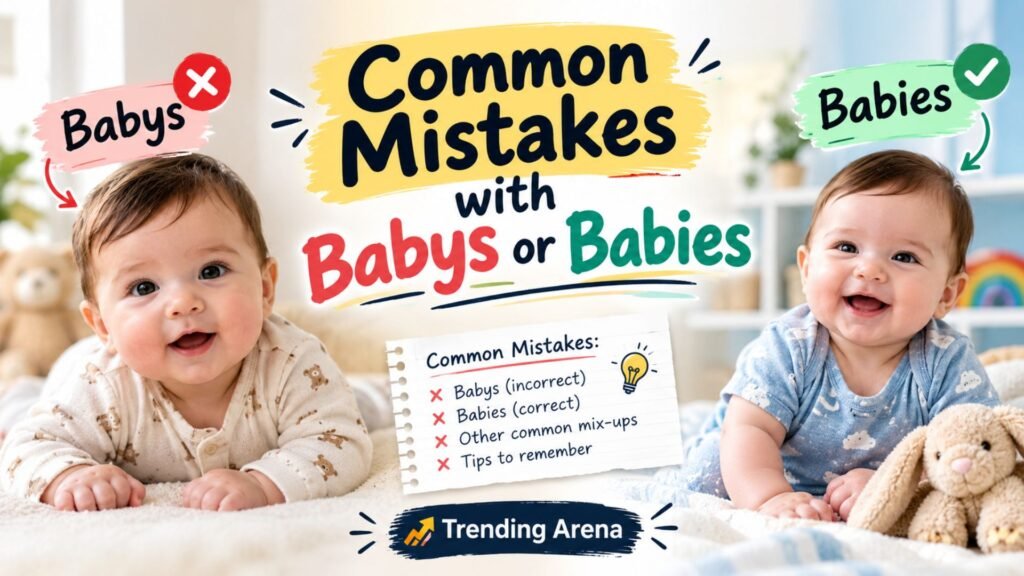
Even careful writers slip on this word. These three patterns cover most of the errors.
1. Adding only “s”
This is the most frequent mistake. A writer sees “baby,” thinks “add an s,” and ends up with “babys.”
- ❌ “The hospital welcomed ten babys this week.”
- ✅ “The hospital welcomed ten babies this week.”
The fix is simple. Check the letter before the “y.” If it is a consonant, use “ies.”
This mistake often happens because the “add an s” habit is strong. Most English plurals do work that way: dog becomes dogs and cat becomes cats. The “y to ies” change is the exception to that habit, so it takes a moment of attention.
2. Confusing plural and possessive
The second most common error mixes up a plural with a possessive. The two forms can look alike, and an apostrophe in the wrong place changes the meaning.
- ❌ “The baby’s are playing in the yard.” (This uses a possessive where a plural is needed.)
- ✅ “The babies are playing in the yard.”
- ❌ “Those are the babies toys.” (A possessive is needed, but the apostrophe is missing.)
- ✅ “Those are the babies’ toys.”
Here is a short set of rules that follows common apostrophe guidance, such as the one in the Cambridge Coaching blog.
- Singular noun: add apostrophe + “s.” The baby’s bottle.
- Plural noun ending in “s”: add the apostrophe after the “s.” The babies’ bottles.
- Irregular plural not ending in “s”: add apostrophe + “s,” as in the children’s room. Note that “baby” is not irregular, so this does not apply to it.
A handy trick is to ask “who owns it?” If one baby owns it, the apostrophe goes before the “s.” If several babies own it, the apostrophe goes after the “s” in “babies.”
Here is a mini checklist for apostrophes with this word.
- Do you mean more than one baby with no ownership? Use babies, with no apostrophe.
- Does one baby own something? Use baby’s.
- Do several babies own something? Use babies’.
3. Forgetting the spelling rule
Sometimes the writer knows the rule but forgets it in a rush. This happens most often with related words.
- ❌ “Her hobbys include knitting for babies.”
- ✅ “Her hobbies include knitting for babies.”
- ❌ “We visited three citys last year.”
- ✅ “We visited three cities last year.”
If you tend to miss this rule, try a final scan before you send or publish. Search your document for words ending in “ys” and check the letter before the “y.” A quick pass can catch a lot of errors.
Bonus Mistake: Using “babies” Where “baby” Belongs
The reverse mistake also appears. Writers sometimes over-correct and write “babies clothes” or “a babies room.” When the word works as an adjective, use the singular.
- ❌ “She runs a babies clothing store.”
- ✅ “She runs a baby clothing store.”
Babys or Babies in Everyday Examples
Seeing the word in real situations helps the rule stick. Here are four common settings.
Emails need to look polished, especially at work. A small spelling slip can make a good message feel rushed.
- “Our team supports new parents and their babies through every stage.”
- “Please send the list of babies attending the Friday class.”
- “We will provide cots for all babies under one year.”
- “Thank you for sharing the babies’ photos from the event.”
Tip for emails: Read the subject line twice. Subject lines are short, so errors stand out more.
News
News writing is direct and fact-driven, and editors follow strict spelling and style rules.
- “Doctors say babies born early need special monitoring.”
- “The city opened a new ward for premature babies.”
- “Local volunteers knitted caps for babies in the hospital.”
- “The study followed more than 1,000 babies over two years.”
Headlines often shorten words, but they still keep the standard plural. You would see “Hospital Welcomes Twin Babies,” not “Babys.”
Social Media
Social posts are fast and casual, but the correct plural still looks better and reads more clearly.
- “So many cute babies at the park today!”
- “Our two babies finally slept through the night.”
- “Sharing my favorite gift ideas for new babies.”
- “The babies’ first splash day was a hit.”
Hashtags can be tricky. Writers sometimes spell a tag as “#babys” by accident. If you want people to find your post, use the standard spelling, “#babies.”
Formal Writing
Formal writing includes essays, reports, grant proposals, and academic papers. These formats expect correct spelling without exception.
- “The report examines how babies develop language skills.”
- “Participants included mothers and their babies.”
- “The program serves babies from birth to age three.”
- “Researchers measured the babies’ response to sound.”
In formal writing, the apostrophe rules also matter. A misplaced apostrophe can confuse a reader or change your meaning. Always double-check possessives in titles, abstracts, and captions.
Babys or Babies: Trends and Usage Data
A note on the data first. The research behind this article came from dictionary, etymology, and grammar guide pages. I did not have a live Google Trends export, so no search-volume numbers are quoted here. If you need exact figures, you can compare “babys” and “babies” yourself in Google Trends. What follows is what the language evidence suggests.
Popularity
Both forms are searched, but for very different reasons.
- Babies is the standard word. People use it in parenting, health, childcare, news, and shopping content all year.
- Babys shows up mostly as a spelling question. People type it when they are unsure and want to check the rule.
That second pattern explains why articles like this one exist. Many searchers are not trying to use “babys” on purpose. They are asking whether it is right.
Usage Insight
A few patterns stand out from the grammar and dictionary sources.
- The rule is stable. The consonant-plus-y rule has been taught in schools for generations. It has not changed.
- The error is common but predictable. Most “babys” mistakes come from habit, not confusion about meaning.
- Apostrophe errors are even more common. Writers mix up baby’s, babies, and babies’ more often than they misspell the plain plural.
- Proper names are the real exception. Family names often keep the “y” and add “s,” as in “the Jollys.” This is the main case where an “ys” ending is correct.
- Related words follow the same pattern. Learning “babies” helps you spell “cities,” “families,” “stories,” and “puppies” as well.
For writers and site owners, this means two things. First, use “babies” consistently, with supporting words like “newborn,” “infant,” “toddler,” “nursery,” and “parents” to make the topic clear. Second, give extra care to apostrophes, because they cause more trouble than the plural itself.
Comparison Table: Babys vs Babies
| Category | Babys | Babies |
| Correct in standard English? | No | Yes |
| Why | Skips the y-to-ies rule | Follows the consonant + y rule |
| Letter before y | b (consonant) | b (consonant) |
| Plural pattern | Add s only | Change y to ies |
| Used for | Nothing in standard use | More than one infant |
| Pronunciation | Unclear | BAY-beez |
| Acceptable in proper names? | Sometimes, as a family name | Not a name rule |
| Fix | Change to babies | Keep as is |
| Similar word that works | Boys (vowel + y) | Cities (consonant + y) |
| Common mistake | Adding only “s” | Adding an apostrophe by accident |
| Memory trick | Looks like a toy plural | “Bye-bye y” |
| Apostrophe version | baby’s (singular) | babies’ (plural) |
FAQs
What is the correct plural of baby?
The correct plural is babies. Change the “y” to “ies” because the letter before the “y” is a consonant.
Is “babys” ever correct?
Not as the plural of the common noun. It may appear in a proper name, because proper names usually just add “s.” In ordinary writing, use “babies.”
Why does baby become babies?
English changes the “y” to “ies” when a noun ends in a consonant plus “y.” The same rule gives cities, families, and stories.
What is the difference between baby’s and babies’?
Baby’s shows that something belongs to one baby. Babies’ shows that something belongs to more than one baby. Babies alone is just the plural with no ownership.
Do boys and keys follow the same rule?
No. They end in a vowel plus “y,” so you only add “s.” That is why we write boys and keys, not “boies” or “keies.”
Is the spelling different in British and American English?
No. Both varieties use baby and babies. Differences between the two mostly involve other words.
Should I write “baby clothes” or “babies clothes”?
Write baby clothes. In this phrase, “baby” describes the clothes and stays singular.
How can I remember the rule quickly?
Check the letter before the “y.” A consonant means change to “ies.” A vowel means add “s.” For baby, the “b” is a consonant, so it becomes babies.
Conclusion
The question of “babys or babies” has a clear answer. Babies is the correct plural, and “babys” is a misspelling. The reason is a standard English rule: when a noun ends in a consonant plus “y,” the “y” changes to “ies.”
The word itself has a friendly history. It began in the late 1300s as babi, a small form of babe, which probably imitated the sounds of baby talk. The spelling rule that shapes its plural is the same one that works for city, family, story, and many other everyday words.
Keep these points in mind:
- One baby: baby.
- More than one: babies.
- Belongs to one baby: baby’s.
- Belongs to several babies: babies’.
- Vowel before the y: just add “s,” as in boys and keys.
- Proper names: usually keep the “y” and add “s.”